
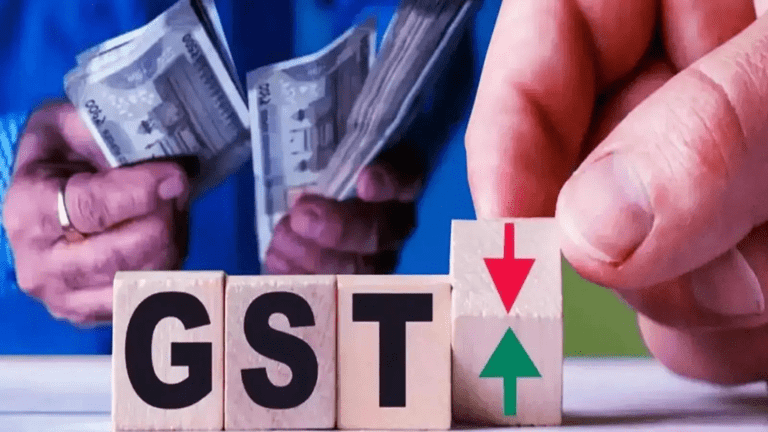
How GST Reforms and Tax Cuts Drove Shoppers
The Indian economy is witnessing a strong consumer revival, and the credit goes largely to GST reforms and recent tax cuts that have put more money in people’s hands. From high-end cars to daily kitchen essentials, shoppers are opening their wallets wider than ever before. The festive season of 2025 has seen record-breaking sales across sectors, signaling renewed consumer confidence and a broader economic boost.
Let’s dive deep into how GST reforms and tax cuts Drove Shoppers measures have driven this consumption surge and what the data tells us about India’s resurgent economy.

1. GST Reforms Simplify Compliance and Reduce Costs
The Goods and Services Tax (GST) has undergone a series of reforms over the past year, aimed at making the system more efficient and business-friendly. Key reforms include:
-
Simplified return filing: The introduction of pre-filled GST returns and automated reconciliation through the updated Invoice Management System (IMS) has reduced compliance costs for small businesses.
-
Lower tax slabs for key items: The government recently cut GST rates on consumer goods such as kitchen appliances, utensils, and home decor items from 18% to 12%, making these products more affordable.
-
Streamlined input tax credit (ITC) rules: Businesses now receive faster ITC refunds, improving cash flow and allowing them to pass on benefits to customers through discounts.
These reforms have encouraged manufacturers and retailers to offer competitive pricing, which has directly translated into higher sales volumes.
2. Tax Cuts Put More Money in Consumers’ Hands
In addition to GST reforms, income tax cuts and rationalization of corporate tax rates have played a major role in reviving consumption.
The government’s move to increase the basic income tax exemption limit and reduce corporate tax rates for MSMEs has led to an increase in disposable income for both households and businesses.
According to official estimates, household disposable income rose by nearly 6.8% in 2025 compared to the previous year, thanks to these tax measures. As a result, families are spending more on:
-
Automobiles: Car and two-wheeler sales jumped by 12.4% year-on-year in October 2025, with mid-range SUVs and electric vehicles leading the growth.
-
Consumer durables: Refrigerator, washing machine, and air conditioner sales increased by 9.6%, boosted by festive discounts and lower GST rates.
-
Kitchenware and daily essentials: The segment grew by 7.3%, reflecting rising middle-class spending.
3. Festive Season Push: Retail and E-commerce Boom
The festive season from September to November 2025 has seen one of the strongest sales growth trends in the last five years. Both offline retail stores and e-commerce platforms have benefited from renewed consumer enthusiasm.
Data from the Confederation of All India Traders (CAIT) shows that total festive sales in 2025 are estimated to have crossed ₹2.4 lakh crore, a sharp rise from ₹1.9 lakh crore in 2024.
E-commerce giants such as Amazon, Flipkart, and Meesho reported a record 30% surge in festive sales, driven by discounts on electronics, apparel, and home appliances.
Industry experts attribute this to price corrections after GST reforms and consumer confidence restored through tax cuts and stable inflation.
4. Auto and FMCG Sectors Emerge as Big Winners
Two sectors that have particularly benefited from this GST-led revival are automobiles and fast-moving consumer goods (FMCG).
-
Automobile sector: Lower GST on electric vehicles and hybrid cars (reduced from 12% to 5%) has encouraged sustainable consumption. Brands like Tata Motors, Maruti Suzuki, and Hyundai reported a double-digit rise in sales during October 2025.
-
FMCG sector: With reduced input costs under GST, companies like HUL, ITC, and Dabur have passed on benefits to customers through affordable product packs. This has spurred growth in both urban and rural markets.
5. MSMEs and Retailers See Improved Business Sentiment
Micro, Small, and Medium Enterprises (MSMEs), which form the backbone of India’s supply chain, have shown improved sentiment after the recent GST rationalization and tax compliance reforms.
Simplified GST filing procedures and faster refunds have allowed MSMEs to focus more on scaling operations rather than dealing with paperwork. Retailers, too, have benefited from reduced working capital blockage, which has led to increased inventory turnover and better profitability.
The Federation of Indian Chambers of Commerce & Industry (FICCI) noted that business confidence among small retailers is at a three-year high, largely due to tax and GST reforms.
6. The Ripple Effect: Higher Consumption Boosts GDP
Higher consumer spending has a direct multiplier effect on the economy. According to the Ministry of Finance, private consumption contributed nearly 58% of India’s GDP growth in Q2 FY2025-26.
This momentum is expected to continue, with economists projecting that India’s GDP growth may touch 7.2% in FY2025-26, supported by strong consumption demand and favorable fiscal policies.
The combined effect of tax cuts, lower GST rates, and digital compliance reforms has created a virtuous cycle—more savings, higher spending, greater demand, and stronger business performance.
Conclusion
The latest wave of GST reforms and tax cuts has not only simplified compliance but also revitalized India’s consumer-driven economy. Shoppers across the country are enjoying better prices, more variety, and higher purchasing power, driving growth across multiple sectors—from cars to kitchenware.
As India moves forward, this balance between fiscal responsibility and economic stimulation will be key to maintaining long-term growth momentum. The data clearly reflects that the government’s tax strategy is not just easing burdens—it’s fueling India’s next consumption boom.