

GST Return Filing New Rules 2026: GSTR-1, GSTR-3B Changes, Penalties & How to Stay Safe
Introduction
GST return filing has always been a critical responsibility for businesses in India, but in 2026, compliance has become stricter than ever. The government has upgraded the GST filing system with advanced data matching, automated checks, and faster action against defaulters.
In our day-to-day GST practice, we clearly see that most GST notices are not due to fraud, but because of small filing mistakes, delays, or mismatches. These mistakes can easily be avoided if taxpayers understand the GST Return Filing New Rules 2026 properly.
This article explains the latest changes in GSTR-1 and GSTR-3B, late fees, penalties, GST portal updates, and practical tips to stay safe.
What Is New in GST Return Filing in 2026?
The GST department has shifted its focus from manual checks to technology-based compliance. Returns are now closely monitored through automated systems.
Major highlights of GST compliance rules 2026:
-
Strong auto-matching of GSTR-1, GSTR-3B, and e-invoice data
-
Immediate alerts for mismatches
-
Blocking of returns for continuous non-filers
-
Strict control on Input Tax Credit (ITC) claims
The message is clear: File correct returns on time or face penalties.
Latest Changes in GSTR-1 (2026 Explained Simply)
GSTR-1 is used to report outward supplies (sales).
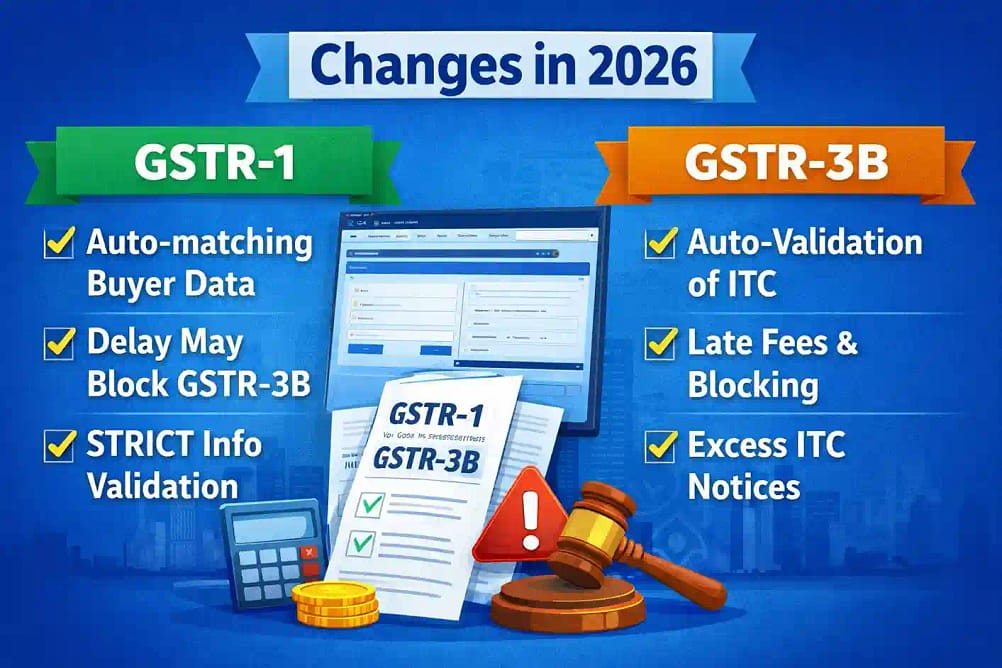
Important GSTR-1 changes in 2026:
-
Invoice details are automatically verified with buyer data
-
Wrong or inactive GSTINs are flagged instantly
-
Delay in GSTR-1 can block GSTR-3B filing
-
Excessive amendments raise compliance risk
Why GSTR-1 accuracy is critical
-
Buyers cannot claim ITC if your data is wrong
-
Complaints may be filed against your GST number
-
Repeated errors may lead to departmental scrutiny
Practical tip: Always reconcile your sales register with GSTR-1 before filing.
New Rules for GSTR-3B in 2026
GSTR-3B is the return where actual tax payment happens.
What has changed in 2026?
-
ITC allowed only if reflected in eligible auto-populated data
-
Excess ITC claims may attract interest and penalties
-
Late filing can lead to return blocking
-
Payment mismatches generate automatic notices
Real-life example (very common):
A small trader in Haryana filed GSTR-3B without reconciling GSTR-1 data. His ITC was auto-restricted, and he received a system-generated notice within 7 days.
This type of issue is now very common under the new GST filing system.
GST Late Fee & Penalty Structure (2026)
Late fees continue to be a major burden for businesses.
GST Late Fee Table
| Return Type | Late Fee per Day | Maximum Late Fee |
|---|---|---|
| GSTR-1 | ₹50 (₹25 CGST + ₹25 SGST) | ₹5,000 |
| Nil GSTR-1 | ₹20 per day | ₹2,000 |
| GSTR-3B | ₹50 per day | ₹5,000 |
| Nil GSTR-3B | ₹20 per day | ₹2,000 |
Important:
Interest @ 18% per annum applies on delayed tax payment, even if return is filed.
GST Portal Updates in 2026 – What Taxpayers Must Know
The GST portal has become more powerful and strict in 2026.
Key GST portal updates:
-
Automatic blocking of returns for repeated defaults
-
System-generated notices without manual intervention
-
PAN-based risk profiling of taxpayers
-
Faster suspension of fake or inactive GST registrations
Common GST portal error messages:
-
“Return filing blocked due to non-compliance”
-
“ITC exceeds eligible limit”
-
“Mismatch between GSTR-1 and GSTR-3B”
Solution:
File pending returns immediately and correct mismatches before deadlines.
Also Read:-https://gstandtax.com/gold-silver-taxation-in-india-2026-buying-selling/

How Small Businesses Can Stay GST-Compliant in 2026
Small traders and MSMEs feel maximum pressure under the new GST rules.
Simple GST compliance tips:
-
File GSTR-1 and GSTR-3B before due dates
-
Reconcile sales, purchases, and ITC every month
-
Avoid fake or suspicious invoices
-
Maintain proper books of accounts
-
Take professional help when required
Remember: Regular compliance builds trust and reduces future problems.
Impact of New GST Rules on Traders & MSMEs
The intention of stricter rules is discipline, not harassment.
Positive impact:
-
Reduction in fake invoicing
-
Fair competition among businesses
-
Faster refunds for genuine taxpayers
Challenges:
-
Higher compliance responsibility
-
Need for accurate record-keeping
-
Less tolerance for errors
With proper planning, GST compliance in 2026 is manageable.
Final Words
GST return filing in 2026 demands timely action, correct data, and discipline. With automated systems and strict checks, the safest approach is honest and regular compliance.
If you understand the GST Return Filing New Rules 2026 and follow simple best practices, GST will not become a burden for your business.
Stay compliant, stay stress-free.
1 thought on “GST Return Filing New Rules 2026: GSTR-1, GSTR-3B Changes, Penalties & How to Stay Safe”