
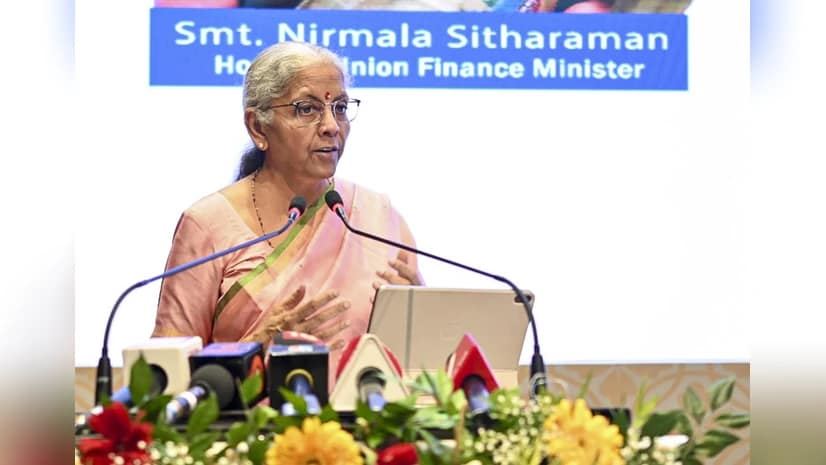
Redefine work approach sitharaman to tax officials
India’s Finance Minister Nirmala Sitharaman has once again emphasized the need for a transparent, technology-driven, and taxpayer-friendly approach within the country’s tax administration. Addressing tax officials recently, she urged them to redefine their work approach and remain accountable to taxpayers, ensuring trust, efficiency, and fairness in India’s evolving tax ecosystem.

Key Message: Redefine work approach sitharaman to tax officials
Sitharaman’s message was clear — the government’s tax machinery must not just collect revenue but also serve the taxpayers with integrity. She highlighted that every tax official plays a crucial role in shaping the taxpayer’s perception of the government.
“Tax officials must remember that every rupee collected represents the trust taxpayers place in the system,” she noted.
The Finance Minister called for a shift from a revenue-centric approach to a service-oriented model, where accountability, empathy, and digital efficiency become the pillars of tax governance.
Focus on Technology and Transparency
Redefine work approach sitharaman to tax officials
Under the ongoing Digital India & Ease of Doing Business reforms, the Finance Ministry has already implemented several measures such as:
- Faceless assessment and appeals to reduce human interface.
- Automated scrutiny systems for faster and unbiased decision-making.
- AI-driven data analytics to identify frauds and improve compliance.
- Taxpayer-friendly grievance redressal mechanisms for timely resolution.
Sitharaman urged officials to leverage these tools effectively, ensuring that technology enhances efficiency without compromising the human touch in governance.
Building a Trust-Based Tax Ecosystem
A key focus of her address was to build a trust-based tax culture — where taxpayers feel confident that their compliance efforts are respected and rewarded. The government has repeatedly assured that “honest taxpayers will not be harassed.”
To achieve this, the Finance Minister advised tax departments to:
- Adopt a problem-solving attitude rather than punitive enforcement.
- Improve communication and responsiveness towards taxpayer queries.
- Ensure consistency and fairness in assessments and decisions.
Encouraging Professionalism and Ethical Conduct
Nirmala Sitharaman also called on officials to maintain the highest ethical standards, reminding them that their actions directly influence the credibility of India’s tax administration. She encouraged officers to focus on continuous learning, understanding emerging business models, and adapting to global tax best practices.
Her message reflects a broader shift in India’s governance philosophy — one that values citizen-centric administration over rigid bureaucracy.
Impact on Businesses and the Economy
Sitharaman’s call for accountability and reform has far-reaching implications for businesses, startups, and MSMEs. A simplified, transparent, and responsive tax system helps reduce compliance costs and builds investor confidence.
- For MSMEs: Simplified procedures and reduced bureaucratic hurdles mean more time and resources to focus on growth.
- For Startups: A clear tax framework ensures ease in scaling up operations and attracting funding.
- For Large Corporates: Predictable tax environments improve foreign investor sentiment and reduce disputes.
Ultimately, when tax officers act as facilitators rather than enforcers, India’s “Ease of Doing Business” ranking and taxpayer satisfaction index both improve — leading to long-term economic gains.
Taxpayers as Partners in Nation Building
Sitharaman’s remarks underline the philosophy that taxpayers are not adversaries but partners in nation-building. Every rupee collected contributes to public infrastructure, education, healthcare, and welfare schemes.
By fostering a positive taxpayer-government relationship, the Finance Minister hopes to create a system where compliance is voluntary and seamless, not forced or complicated.
This aligns with India’s goal of achieving a 5 trillion-dollar economy, where efficient taxation forms the financial backbone of growth.
Next Steps for Tax Departments
To translate Sitharaman’s vision into action, tax departments across India can focus on the following key steps:
- Enhance Training Programs: Build expertise in digital tools, ethics, and taxpayer communication.
- Strengthen Feedback Mechanisms: Regularly gather taxpayer feedback to identify pain points.
- Simplify Procedures: Make filing, assessment, and appeal processes more user-friendly.
- Increase Transparency: Publish regular reports on case resolutions and taxpayer satisfaction.
- Collaborate Across Departments: Encourage coordination between CBDT, CBIC, and state tax bodies for unified implementation.
Such initiatives will help transform India’s tax administration into a world-class system built on fairness, innovation, and accountability.
Conclusion: A New Era of Accountability and Trust
Nirmala Sitharaman’s message to tax officials serves as both a reminder and a roadmap — to not only collect taxes but also to serve taxpayers with integrity, efficiency, and respect.
As India continues its journey toward digital governance, this shift towards accountability and empathy will strengthen the foundation of the nation’s tax system. A redefined work approach, supported by technology and ethics, can truly make India’s tax administration a model of transparency and trust for the world to follow.