
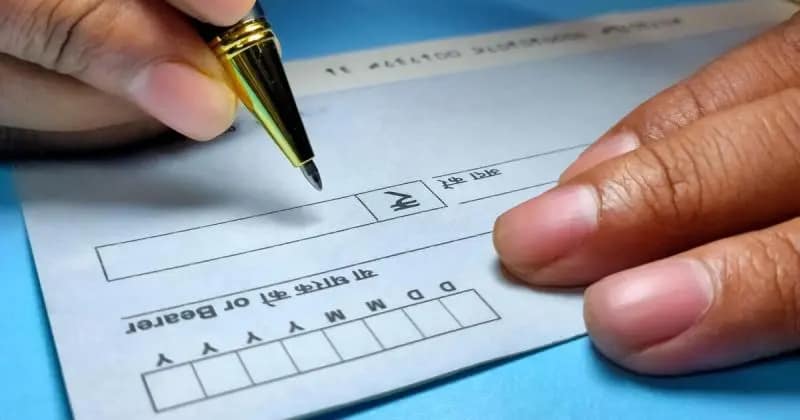
The Reserve Bank of India has decided to defer the rollout of the second phase of its faster cheque clearance system. This phase was earlier scheduled to come into effect from January 3, 2026. The decision has drawn attention because it directly affects how quickly cheque payments are processed across the Indian banking system. The move indicates that the central bank wants to give more time to banks to prepare for operational and technical changes.
Cheque clearing, though used less than digital payments, still remains important for many individuals, businesses, and institutions. Any change in the cheque clearance system has a wide impact on banking operations, customer experience, and settlement timelines.

What Is the Faster Cheque Clearance Framework
The faster cheque clearance framework is part of the Reserve Bank of India’s effort to modernize traditional banking processes. Under this framework, banks are expected to process cheques more quickly by using digital images instead of physical movement of paper cheques.
Currently, cheque clearance works through the Cheque Truncation System. In this system, physical cheques are scanned and their images are shared electronically for verification and settlement. The goal of the faster clearance framework is to further reduce processing time and make cheque-based transactions more efficient.
What Phase Two Was Supposed to Change
The second phase of the faster cheque clearance framework was aimed at tightening timelines. Under this phase, banks would have been required to approve or reject cheques within three hours of receiving their images. This was a significant change compared to existing timelines, which allow banks more flexibility.
The idea behind this proposal was to speed up settlement and reduce delays for customers. Faster approval or rejection would mean quicker access to funds for cheque recipients and faster closure for cheque issuers.
Comparison Between Phase 1 & Phase 2 of the Cheque Clearance System
| Aspect | Phase 1 Cheque Clearance System | Phase 2 Cheque Clearance System |
|---|---|---|
| Implementation Status | Already implemented and currently in use | Rollout deferred by RBI |
| Decision Timeline | Banks have flexible timelines to approve or reject cheques | Banks required to approve or reject cheques within three hours of receiving cheque images |
| Processing Speed | Faster than traditional physical cheque movement but not time-bound strictly | Significantly faster with strict time limits |
| Technology Requirement | Basic digital image processing and existing CTS infrastructure | Advanced automation, real-time monitoring, and stronger IT systems |
| Operational Pressure on Banks | Moderate operational pressure | High operational pressure due to tight timelines |
| Risk of Errors and Fraud | Managed with existing checks and controls | Higher risk if systems are not fully prepared |
| Customer Benefit | Improved clearance compared to old systems | Faster fund availability and quicker settlement |
| Readiness Level | Most banks are compliant | Many banks need more time to prepare |
| RBI’s Approach | Gradual improvement in cheque clearing efficiency | Aggressive efficiency with safeguards, hence deferred |
| Impact of Deferment | No change in current cheque processing | Banks get more time to upgrade systems |
Why RBI Has Deferred Phase Two
The Reserve Bank of India has deferred the rollout because banks need more time to streamline their internal processes. Implementing a three-hour decision window requires strong digital infrastructure, real-time monitoring systems, trained staff, and robust risk management tools.
Not all banks are at the same level of technological readiness. Public sector banks, regional banks, and smaller institutions may face challenges in meeting such tight deadlines consistently. By deferring the rollout, the RBI is allowing banks to strengthen systems without risking operational failures.

Impact on Banks
The deferment provides relief to banks that were under pressure to upgrade systems quickly. Banks now have additional time to improve automation, enhance fraud detection mechanisms, and ensure accuracy in cheque verification.
Cheque clearance involves risk, especially in cases of forged signatures, insufficient funds, or mismatched details. Rushing decisions within a short window without adequate preparation could increase errors. The RBI’s decision reduces this risk and allows banks to focus on quality rather than speed alone.
Impact on Customers
For customers, the immediate impact is neutral. Cheque clearance timelines will continue as per existing rules. While faster clearance would have been beneficial, delays caused by poorly implemented systems could have created more problems.
Customers who rely heavily on cheques, such as senior citizens, small businesses, and institutions, benefit from stability and reliability. A cautious approach ensures that cheques are processed accurately and disputes are minimized.
Importance of Cheques in the Digital Age
Even though digital payments like UPI, NEFT, and IMPS have grown rapidly, cheques still play a role in the Indian financial system. Many legal, corporate, and institutional payments still use cheques for record-keeping and formal transactions.
Large-value payments, post-dated cheques, and security cheques are common in business dealings. Because of this, improvements in cheque clearance remain relevant, even in a largely digital ecosystem.
Operational Challenges in Faster Cheque Processing
One of the biggest challenges in faster cheque clearance is fraud prevention. Banks must verify signatures, account balances, and transaction history before approving a cheque. Doing all this within three hours requires advanced analytics and automated decision-making tools.
Another challenge is inter-bank coordination. Cheques often involve two different banks, and smooth communication between systems is essential. Any delay or technical glitch can affect the entire process.
also read: https://gstandtax.com/coal-india-share-price-complete-guide-for-investors/

Technology and Infrastructure Readiness
To implement phase two successfully, banks need high-quality image processing systems, real-time alert mechanisms, and secure data-sharing platforms. Cybersecurity is also a major concern because cheque images contain sensitive financial information.
The deferment suggests that RBI wants banks to focus on building strong, secure, and reliable systems before moving to stricter timelines. This aligns with the regulator’s cautious and stability-focused approach.
Regulatory Approach of RBI
The RBI is known for balancing innovation with risk management. While it promotes faster and more efficient payment systems, it also ensures that changes do not disrupt financial stability.
By deferring phase two, the RBI has shown that it values preparedness over speed. This decision reflects a regulatory philosophy that prioritizes systemic safety, customer protection, and long-term efficiency.
Comparison with Digital Payment Systems
Digital payment systems like UPI offer instant settlement, which sets high expectations for all forms of payments. However, cheques are fundamentally different because they involve authorization, verification, and legal validity.
Trying to match digital payment speeds without adequate safeguards could increase disputes and fraud. The RBI’s decision recognizes this difference and treats cheque clearance as a process that requires careful handling.
also read: https://gstandtax.com/shriram-finance-share-shriram-finance-share-price/

What Happens Next
The RBI is likely to review the readiness of banks before announcing a new date for phase two implementation. Banks may be required to submit compliance reports, conduct pilot testing, or undergo system audits before the framework is rolled out.
Until then, existing cheque clearance timelines will continue. Customers and businesses should not expect immediate changes in cheque processing speed.
Lessons for the Banking Sector
The deferment highlights the importance of preparation when implementing regulatory changes. Banks must invest continuously in technology, staff training, and process improvement to meet future requirements.
It also shows that coordination between regulators and banks is essential. A collaborative approach helps avoid disruptions and ensures smoother transitions.
Broader Implications for Financial Reforms
This decision fits into the broader context of India’s financial reforms, which aim to modernize systems while maintaining trust and stability. Not every reform needs to be rushed. Some changes require phased implementation and careful evaluation.
The cheque clearance framework is one such reform, where accuracy and reliability are just as important as speed.
Conclusion
The Reserve Bank of India’s decision to defer the second phase of the faster cheque clearance framework is a cautious and well-considered move. While faster cheque processing remains a long-term goal, the RBI has recognized the need for banks to be fully prepared before implementing stricter timelines.
For now, banks gain additional time to strengthen systems, customers benefit from stable and reliable processing, and the financial system avoids unnecessary risk. When phase two is eventually rolled out, it is likely to be more efficient, secure, and beneficial for all stakeholders.
This development highlights the RBI’s balanced approach toward reform, ensuring that progress does not come at the cost of trust and stability in the banking system.
1 thought on “RBI Defers Phase Two of Faster Cheque Clearance System: Full Analysis”